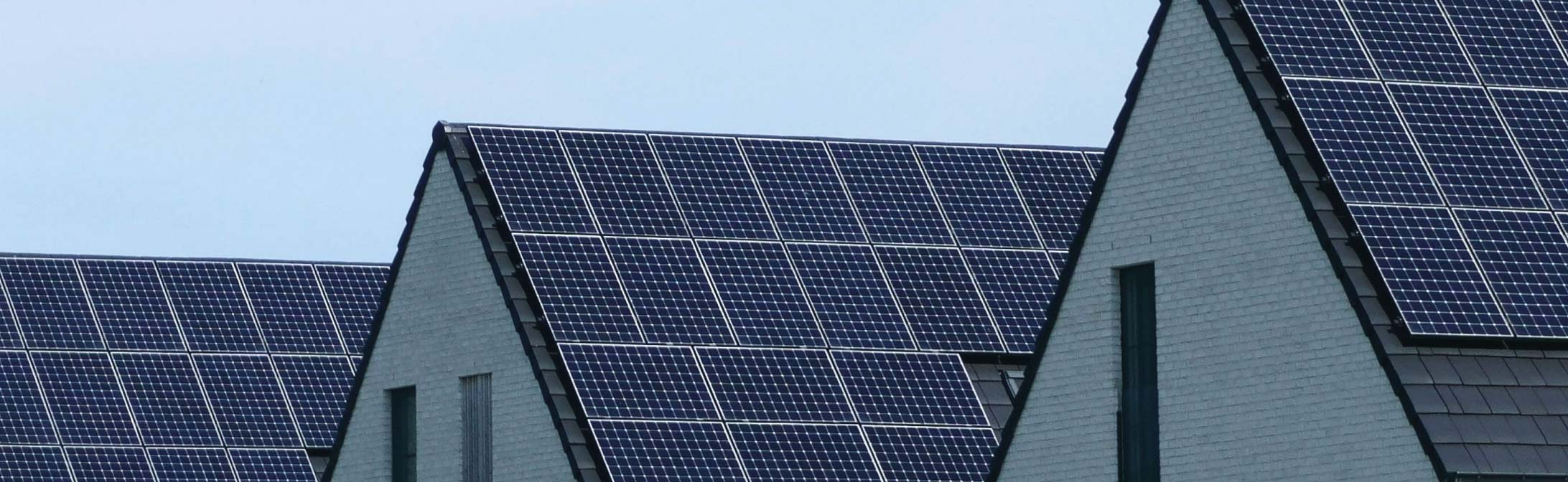
When rooftop solar doesn’t work
Not every roof is solar-ready – and that’s okay.
Some homeowners discover during their consultation that their roof is too shaded, too small, too steep, or simply facing the wrong direction for efficient solar production.
But that doesn’t mean solar is off the table. It just means your system might need to move from the roof to the ground.
At Sky Solar Pro, we help California homeowners with non-ideal roofs achieve energy independence through ground-mounted solar systems – a flexible, powerful alternative that often performs even better than rooftop setups.
1. What is a ground-mounted solar system?
A ground-mounted solar system works exactly like a rooftop system – the difference is that panels are installed on racks or frames anchored into the ground rather than your roof.
They can be placed in your backyard, side yard, or any open piece of land that receives direct sunlight for most of the day.
Because they aren’t tied to your roof’s shape or angle, they can be positioned at the perfect tilt and direction to maximize solar output year-round.
2. When a ground mount makes more sense
Here are common reasons homeowners choose ground-mounted solar over roof-mounted:
- Shaded or obstructed roof – Nearby trees, chimneys, or neighboring buildings block sunlight.
- Small or complex roof design – Limited flat space or multiple angles reduce panel efficiency.
- Old roofing materials – Your roof needs replacement soon, making solar installation risky or premature.
- Aesthetic preferences – Some homeowners prefer keeping panels out of sight for design or HOA reasons.
- Expansion flexibility – You plan to add batteries or an EV charger and want room to scale your system later.
In many cases, a ground-mounted array can produce 15–25% more energy than the same number of panels on a shaded or poorly oriented roof.
3. Types of ground-mounted systems
a. Standard fixed-tilt mounts
- Panels are attached to metal frames set at a fixed angle.
- Simple, durable, and cost-effective.
- Ideal for most residential properties.
b. Pole-mounted systems
- Panels are elevated on single poles, adjustable in direction and tilt.
- Useful for properties with uneven terrain or limited yard space.
c. Tracking systems
- Panels automatically follow the sun throughout the day.
- Can boost production by 20–30%, though more expensive.
- Common for commercial or large-scale residential systems.
Sky Solar Pro typically recommends fixed or pole-mounted systems for homeowners – they offer excellent performance without overcomplicating maintenance or costs.
4. How much space do you need?
For most California homes, every 1 kilowatt (kW) of solar capacity requires roughly 80–100 square feet of open space.
That means a typical 6 kW residential system would need about 600 square feet of clear ground – roughly the size of a two-car garage.
Ground systems can be arranged in multiple rows, so even narrow or irregular yards can work with smart layout design.
5. Cost comparison: roof vs ground
| System type | Average cost per watt (2025) | Example system size | Total cost (before 30% ITC) |
| Rooftop solar | $2.80 – $3.40 | 6 kW | $16,800 – $20,400 |
| Ground-mounted solar | $3.20 – $3.80 | 6 kW | $19,200 – $22,800 |
Ground systems generally cost 10–15% more due to extra materials (racks, concrete footings, trenching).
However, they often produce more energy, offsetting that difference in the long term – especially under California’s NEM 3.0, where self-consumption matters most.
6. Performance benefits
Ground-mounted systems aren’t just an alternative – they can be a performance upgrade:
- Perfect tilt optimization: Panels can be set at the ideal 30–35° angle for maximum sunlight.
- Better cooling: Ground-mounted panels run cooler than rooftop ones, improving efficiency by up to 5%.
- Easy maintenance: Panels are easy to access for cleaning and inspection.
- Higher output potential: No roof shade, no obstructions – just pure sun.
In short, the best-performing system isn’t always the one on your roof – it’s the one that gets the most sunlight.
7. Permitting and installation process
Ground-mounted systems follow the same basic steps as rooftop solar but with added attention to land and foundation preparation.
Sky Solar Pro manages:
- Site inspection and soil evaluation
- Engineering design for tilt, orientation, and wiring routes
- Permit applications for building and electrical work
- Trenching and conduit installation
- Mounting and panel installation
- Utility interconnection and activation
For most homeowners, installation takes 1–3 days, while permitting can take 2–6 weeks, depending on the city.
8. Maintenance and lifespan
Maintenance for ground-mounted solar is straightforward – just periodic cleaning and occasional visual checks.
Because they’re easier to access, maintaining and upgrading them over the years is simpler than rooftop systems.
With proper care, panels last 25–30 years, and racking structures often last even longer.
Sky Solar Pro systems include 25-year performance warranties and remote monitoring, so you can track your energy output anytime.
9. Pros and cons at a glance
| Pros | Cons |
| Optimal sun exposure | Slightly higher upfront cost |
| Easy access for cleaning and repairs | Requires available yard space |
| Better airflow and cooling efficiency | More visible on property |
| Expandable in future | May require trenching or grading |
| Not limited by roof shape or angle | Permit process can take longer |
10. How to know if ground-mounted solar is right for you
Ground-mounted solar might be the right fit if:
- Your roof is shaded more than 30% of the day.
- You have open land or backyard space.
- You’re planning future energy upgrades like batteries or EV charging.
- You prefer easy access for maintenance or want to preserve your roof’s aesthetics.
Sky Solar Pro performs a comprehensive shading analysis during your consultation – if roof placement isn’t ideal, we’ll model ground-mounted layouts and show how much more energy they could generate.
11. What about HOA or zoning rules?
In most California cities, ground-mounted solar is fully legal for residential use, as long as:
- The structure height doesn’t exceed local limits (often under 10 feet).
- It meets required property setbacks.
- You follow HOA visibility rules if applicable.
Sky Solar Pro handles all local compliance and paperwork so your project is approved the first time.
12. Environmental and resale benefits
Ground-mounted systems often become conversation pieces – homeowners take pride in visibly producing their own power.
They also:
- Increase property resale value (just like rooftop solar).
- Lower your carbon footprint by several tons of CO₂ each year.
- Preserve your roof’s integrity and longevity.
For eco-conscious buyers, seeing a well-placed, high-efficiency system is often a selling point rather than a distraction.
13. Sky Solar Pro’s approach to non-ideal roofs
When we evaluate your home, we don’t just ask, “Can solar fit on your roof?”
We ask, “Where can solar work best for you?”
If your roof isn’t ideal, our design team creates a full ground-mounted layout, showing panel placement, production estimates, and visuals – so you can make a confident decision.
From permitting to installation, everything is handled in-house, with transparent pricing and long-term warranties.
Conclusion: There’s always a way to go solar
A shaded or small roof doesn’t have to keep you from saving money or living sustainably.
With the right design, ground-mounted solar systems can outperform rooftop setups and offer flexibility, expansion, and easy maintenance.
If your home isn’t roof-ready for solar, Sky Solar Pro can still make it energy-ready – from the ground up.
Think your roof can’t go solar? Let us prove otherwise.
Book your free consultation with Sky Solar Pro and discover how a ground-mounted system could power your home for decades.