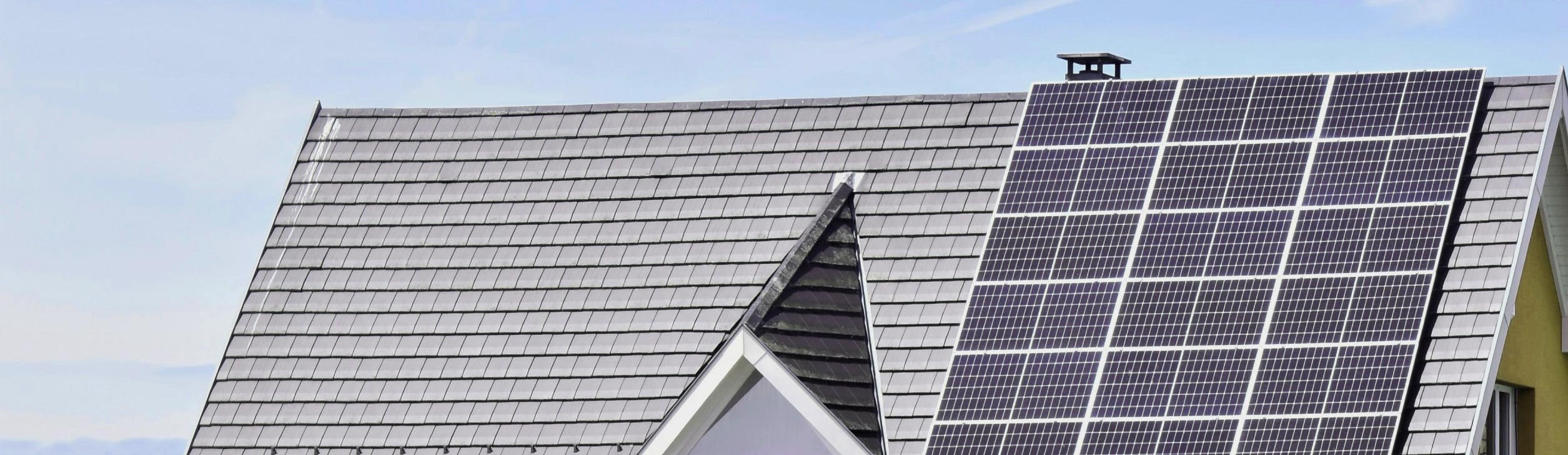
The best direction for solar panels
In the United States, the best direction for solar panels is true south. That’s because the sun stays in the southern half of the sky as it moves from east to west throughout the day.
South-facing panels get the most direct and consistent sunlight. If true south isn’t possible, southeast and southwest still perform well – usually only 5 – 10% less efficient.
When homeowners compare the best orientation for solar panels, this south-facing setup is the benchmark.
Can I install solar panels on an east or west roof?
Yes.
-
East-facing panels capture strong morning sun.
-
West-facing panels excel in the afternoon and early evening.
West-facing systems are especially helpful in regions with time-of-use (TOU) electricity pricing because they generate more power during high-rate hours.
What about north-facing roofs?
North-facing roofs receive the least direct sunlight and are the least ideal.
But solutions like tilted racking systems or ground mounts can help you achieve good performance even with challenging roof orientations.
The ideal angle for solar panels
To maximize production, your panels should be tilted to capture as much sunlight as possible throughout the year. Many homeowners search for the best angle for solar panels, and the general guideline is simple:
The optimum tilt angle is close to your geographic latitude.
For example:
-
Los Angeles, CA (34° latitude): panels tilted ~30–35°
-
New York City, NY (40° latitude): panels tilted ~35–40°
On flat roofs, tilted racking helps achieve the optimum angle for solar panels without relying on the roof’s natural slope.
When evaluating system efficiency, installers also consider the best angle for PV panels for your location and roof type.
Seasonal angle adjustments
Adjustable systems can be tilted higher in winter and lower in summer for maximum output. But most homes use fixed mounts because they’re simpler, more durable, and cost-effective.
What Sky Solar Pro does
We use advanced solar modeling software to design each system with the best angle for PV panels and the most efficient orientation based on your roof slope, shading, and location. If your roof isn’t ideal, we’ll explore alternative mounting angles or layout designs to help your system perform at its best.